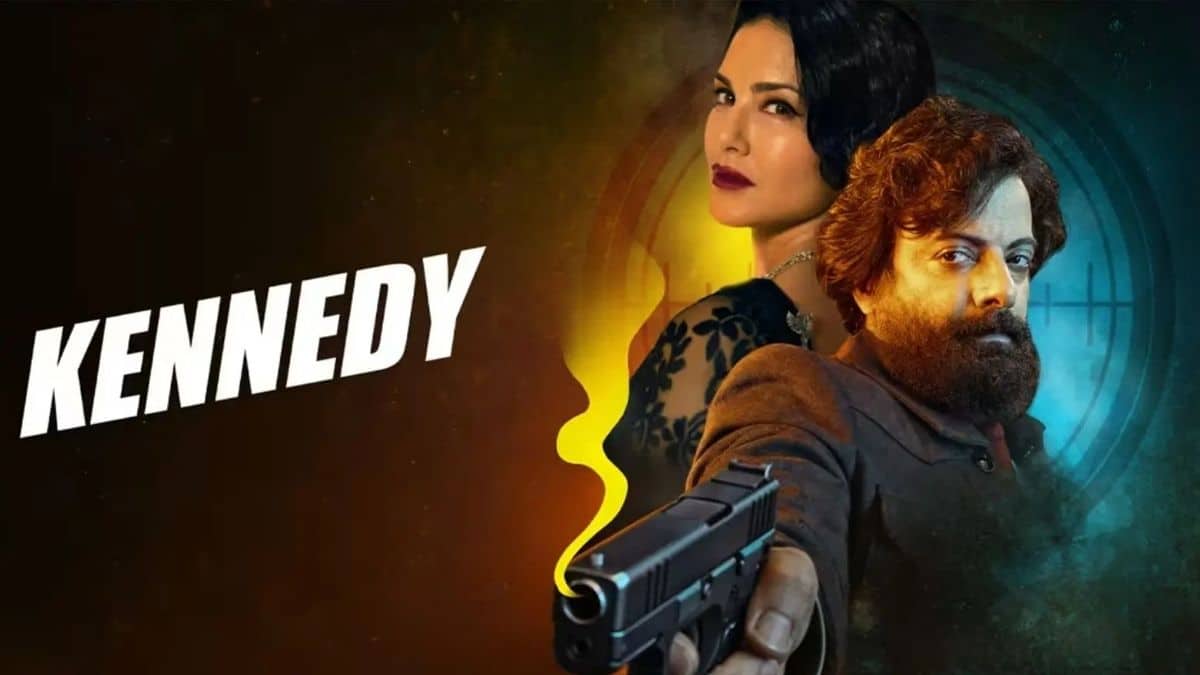
Dark, macabre, gritty and criminally undervalued, Anurag Kashyap’s Kennedy drifted for nearly three years in a peculiar cinematic purgatory. It drew a standing ovation at Cannes, travelled the festival circuit like a whispered legend, provoked discussion in distant auditoriums, and yet remained strangely inaccessible to the audience it was born from. Its arrival on ZEE5 feels less like a conventional premiere and more like the unsealing of something long buried. What surfaces is not merely a thriller but a delirium steeped in guilt, power and systemic decay. The film does not invite comfort. It unsettles, seduces and then refuses to leave.
There is something almost poetic about its delayed homecoming. A film born in chaos, shaped by the emotional and ideological turbulence of its maker, and released into a world that has already lived through the trauma it depicts. Kennedy juxtaposes the stark realities of the pandemic with an internal apocalypse. It begins as a slow ember, restrained and observant, before swelling into a moral inferno by its final act. It refuses to sit neatly within the contours of conventional neo-noir. Instead, it dismantles that binary entirely, bending genre into something more psychologically corrosive.
The story unfolds in a pandemic-scarred Mumbai, a metropolis rendered spectral. Streets lie vacant, faces disappear behind masks, news bulletins flicker like anxious pulse beats. Kashyap frames the city almost like a graphic novel in motion, drenched in shadows, heightened by operatic crescendos and jazzy undertones. The silence of lockdown becomes a character in itself. At the centre stands Kennedy, embodied by Rahul Bhat with unnerving restraint. By night he is an insomniac chauffeur for a luxury ride service. Beneath that anonymity lives a contract killer, deployed quietly by Police Commissioner Rasheed Khan, played with chilling composure by Mohit Takalkar.
Kennedy was once Uday Shetty, an idealistic yet impulsive cop who joined the force to combat corruption, only to become entangled in it. Alongside Rasheed and Inspector Abhijit Kale, portrayed by Shrikant Yadav, he pursued the gangster Saleem. During a tense interrogation at the apartment of Saleem’s associate Gunjan, Uday accidentally kills her brother Chandan while attempting to force a confession. What begins as intimidation spirals into fatal excess. The media brands him a “killer cop.” Public fury erupts. The system that once applauded aggression now demands sacrifice.