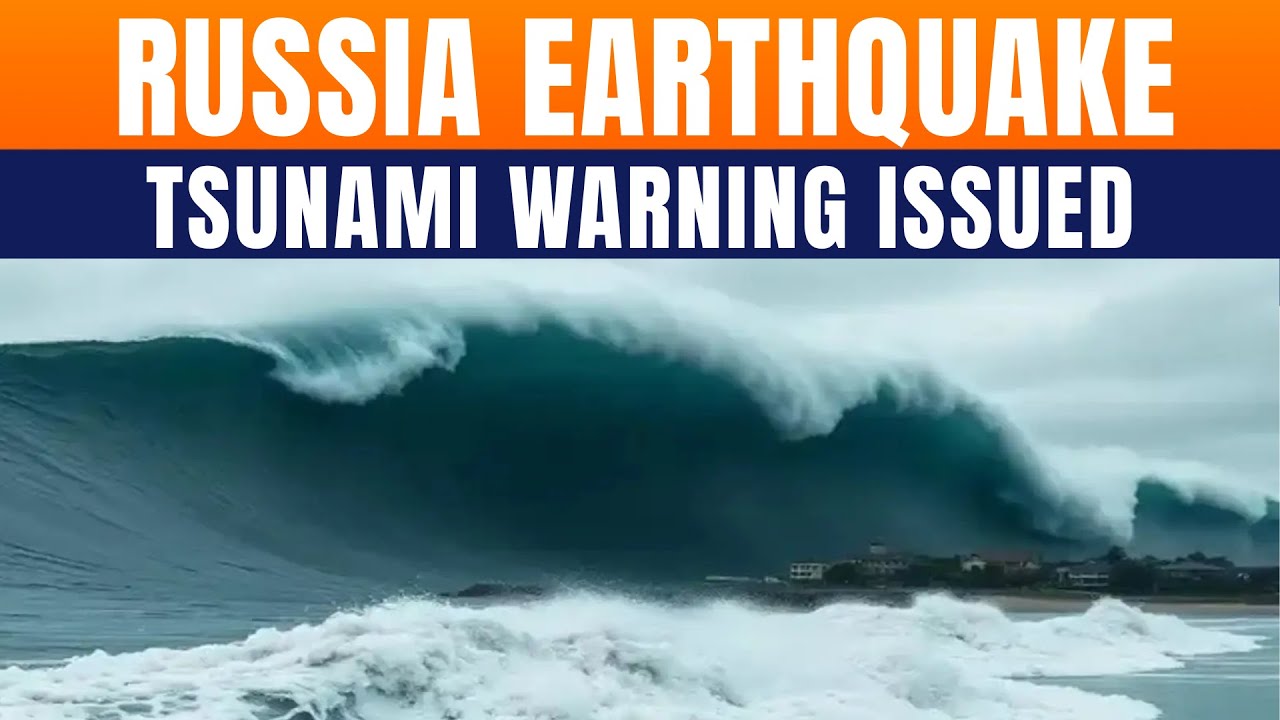
A powerful 7.4 magnitude earthquake struck off the eastern coast of Russia’s Kamchatka region on Saturday, triggering a tsunami warning. According to the US Geological Survey (USGS), the quake struck 111 kilometres (69 miles) east of the Russian city of Petropavlovsk-Kamchatsky, the administrative centre of the Kamchatka region, at a depth of 39.5 kilometres.
Following the earthquake, local authorities in the Kamchatka region issued a tsunami warning. Kamchatka region governor Vladimir Solodov said on his Telegram channel that a tsunami warning has been issued. We urge you to be especially careful when visiting the beach and other areas at risk of a tsunami.
The Governor advised people to maintain peace and keep an eye on information coming from official sources.
Meanwhile, Japanese media outlet NHK World, citing the Japan Meteorological Agency, reported that the earthquake in Kamchatka could cause minor tidal fluctuations off the coast of Japan, but there was no threat of damage from the quake in the country.
According to Russian state news agency RIA Novosti, the quake was part of a series of aftershocks that followed a powerful 8.8 magnitude earthquake that struck Kamchatka on July 30.
The powerful earthquake in July triggered a tsunami warning for parts of the Pacific Ocean. The USGS warned that dangerous tsunami waves could reach coastal areas of Russia and Japan within three hours of the quake.
The quake was recorded at a shallow depth of 19.3 kilometers (12 miles), raising the risk of strong tremors on land and possible tsunami waves. Coastal residents in affected areas have been urged to move to higher ground and follow local emergency protocols.
Immediately after the earthquake, several videos appeared on social media showing strong shaking. Some videos showed furniture shaking violently, while others showed scenes of fear and damage to buildings in the Kamchatka region. Local reports said infrastructure had been damaged, although a full assessment was still underway.
The earthquake struck near Avacha Bay, which is known for its seismic activity due to its location along the Pacific Ring of Fire, one of the most active tectonic regions in the world.