



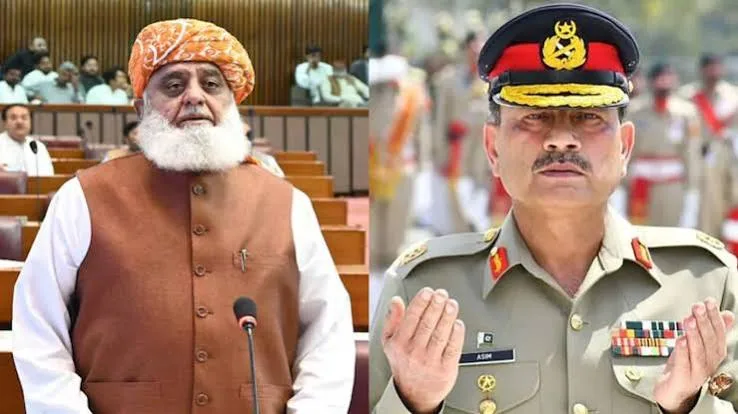
Maulana Fazlur Rehman, the veteran Pakistani cleric and party leader long seen as a political deal-maker, is now openly confronting the country's military leadership. He has publicly challenged army chief Field Marshal Asim Munir to contest elections, accused the army of abandoning its soldiers in Kargil, invoked the 1971 surrender to warn against military overreach, and questioned how the establishment is handling ties with China and the country's mineral resources.
The confrontation in Khyber Pakhtunkhwa
The federal government has in the past month imposed emergency measures and governor's rule in Khyber Pakhtunkhwa, citing security and administrative concerns. The opposition calls this an attack on provincial autonomy, and Rehman is among its loudest critics. His Jamiat Ulema-e-Islam (F) says the emergency is aimed at anti-encroachment operations and not at counterterrorism.
The party's provincial executive has announced protests across Khyber Pakhtunkhwa on 15 November in support of Rehman's position on mineral resources. It has demanded that all foreign mineral agreements be made public, and complained of smear campaigns that use fabricated videos and photographs.
Competing readings
Analyst Muhammad Amir Rana attributes the rift to years of setbacks, among them the Taliban's return to Kabul, which did not curb the Pakistani Taliban, and the uncertain returns from the China-Pakistan Economic Corridor, along with the military's growing hold on politics and the economy. He argues Rehman waited for a better deal from the establishment and, when it did not come, took up the anti-establishment line once held by Imran Khan.
Shahzad Akbar, a former adviser to Imran Khan, puts the shift down to the concentration of power under Munir. He suggests the confrontation could be a staged opposition and that President Asif Ali Zardari may have encouraged Rehman, possibly over a push for new provinces, and says Rehman also wants to stay relevant. These are opinions and none has been verified.
Rana also points to resentment among contractors and mine owners in Khyber Pakhtunkhwa and Balochistan over the military's growing role in mines and large projects, and says the military is backing new political platforms, first in Balochistan and then in Khyber Pakhtunkhwa, through local engagement and workshops by the XII Corps and the National Defence University. He reads this as a threat to Rehman's base that may push him towards a major political deal. The report relies on analysts and is a single account.