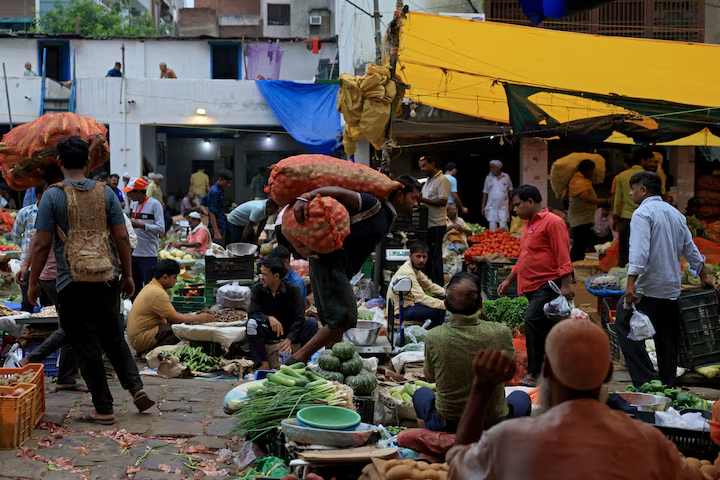
The monthly economic review says weather, commodity prices and an intensifying El Niño have made the outlook for food prices and farm output uncertain.
NEW DELHI:
Higher food inflation could absorb a larger share of household disposable income and constrain spending on non-food goods and services, the Finance Ministry said in its monthly economic review released on Monday.
The warning provides a counterpoint to India’s strong 7.8 per cent April-June GDP growth. While overall demand has remained resilient, households facing higher expenditure on food may defer purchases of consumer durables, clothing, travel and other discretionary items.
The review said the outlook for agricultural production and food prices had become uncertain because of an intensifying El Niño expected to peak late in 2026. Global commodity prices and weather-related disruptions remain additional inflation risks.
Food inflation reached 5.32 per cent in June, while headline consumer inflation was 4.38 per cent. Food carries a substantial weight in India’s consumer-price index and accounts for a larger proportion of spending among lower-income households.
The ministry said domestic economic activity, inflation and India’s external position had nevertheless remained relatively stable despite an uncertain global environment. Resilient demand continued to support growth, although its pace had moderated in some areas.
Bond markets were another source of concern. The report said movements in Indian yields in either direction could pose risks, while the government was monitoring global sovereign-bond markets.
The immediate outlook will depend on September rainfall, crop arrivals, energy costs and whether food-price pressures become more broadly embedded in retail inflation. These factors could also influence the Reserve Bank of India’s interest-rate decisions.