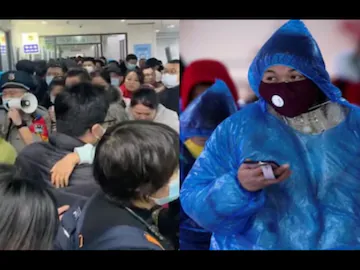
Amid reports of a Human Metapneumovirus (HMPV) outbreak in China, shocking videos showing crowded hospitals and children hooked up to IV drips have gone viral, sparking global panic. Many viewers have jumped to conclusions, fearing a resurgence of the Covid-19 pandemic or a new health crisis. However, the truth behind these distressing visuals may not be as alarming as they seem.
The Real Reason Behind the Overcrowded Hospitals
While these visuals may remind us of the chaos during the peak of the Covid-19 pandemic, the overcrowding in Chinese hospitals is rooted in deeper issues within the country’s healthcare system. According to several studies, the Chinese population has a tendency to visit large, tertiary hospitals for even minor ailments, bypassing local general practitioners (GPs) and primary healthcare centers.
This cultural trend has led to overcrowding in large hospitals, especially during the winter months when various infections are circulating. This isn’t a rare occurrence; it’s a regular feature of China’s healthcare system, where patients flock to big hospitals due to inadequate access to quality care at local clinics.
A Healthcare System Struggling to Cope
A study published in the International Journal of Health Policy and Management reveals the deep flaws in China’s public health centers (PHCs). Despite ongoing investments in these centers, their performance remains poor, and patients still prefer seeking treatment at large hospitals, overwhelming them in the process. The lack of coordination between different levels of care and the absence of family doctors to act as “gatekeepers” exacerbates the issue.
As a result, large hospitals in China have become the first point of contact for even minor illnesses, leading to packed waiting rooms and extended patient queues—exactly what we’re seeing in the viral videos.
IV Drips: A Cultural Norm, Not an Emergency
Another unsettling image from these videos is that of children receiving intravenous (IV) drips. While this might seem concerning, it’s a common practice in China. Studies show that IV drips are often used even for mild conditions, and the country’s consumption of intravenous fluids is staggering. In 2009 alone, China consumed 10.4 billion bottles of infusion fluid, a rate far higher than most other countries.
Dr. Rajeev Jayadevan, co-chairman of the National Indian Medical Association’s COVID Task Force, explains that in both China and India, patients often request treatments like IV drips, even when not medically necessary, due to a belief that it will speed up their recovery. In China, this desire is so prevalent that patients feel “underserved” if they are not given an IV drip during their visit.
The Truth Behind the Panic
While the viral videos of crowded hospitals and frail children may be unsettling, it’s important to remember that these images don’t necessarily indicate a massive health crisis. They reflect a long-standing cultural practice and systemic healthcare issues in China, rather than a sudden outbreak of a deadly disease.
The visuals may evoke fear, but the real story is far less dire than what social media is making it out to be. So, before jumping to conclusions, it’s crucial to understand the bigger picture and avoid fueling unnecessary panic.