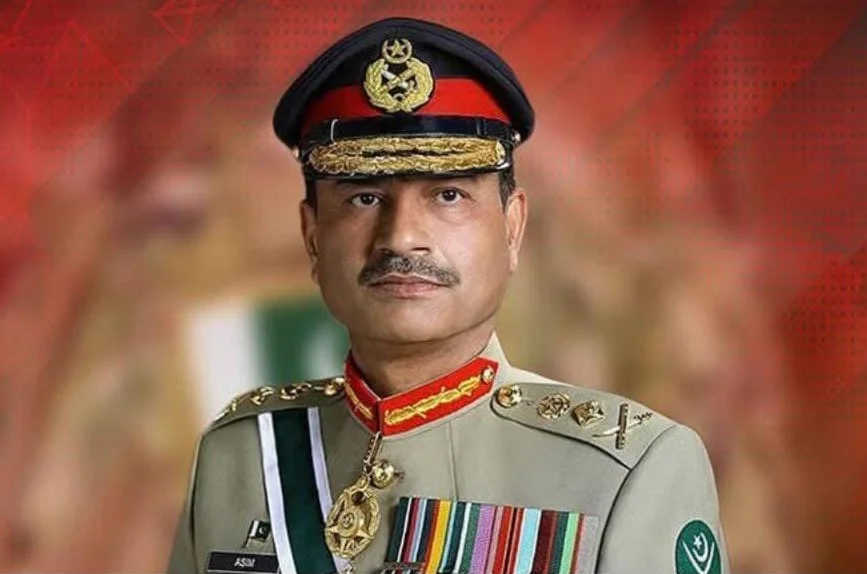
Pakistan’s civil-military balance has shifted further towards the armed forces under Field Marshal Asim Munir, with constitutional changes expanding his formal authority while the military has taken an increasingly visible role in diplomacy, economic policy and other areas traditionally led by elected civilian institutions.
The most consequential change came through Pakistan’s 27th Constitutional Amendment, enacted in November 2025. The amendment rewrote Article 243 of the Constitution, abolished the office of Chairman Joint Chiefs of Staff Committee and created the post of Chief of Defence Forces, or CDF. Under the revised structure, the Chief of Army Staff concurrently serves as CDF, placing the army chief at the top of a more centralised military command system.
Munir was formally appointed Pakistan’s first CDF in December 2025 for a five-year term while continuing as army chief. The restructuring gave the office responsibility extending across the armed services rather than leaving coordination with the chairman of the Joint Chiefs of Staff Committee, the position it replaced.
The constitutional changes went beyond military command. Officers holding five-star rank received extensive constitutional protections, while a new Federal Constitutional Court assumed jurisdiction over constitutional disputes previously handled by the Supreme Court. The government presented the reforms as measures to improve defence coordination, governance and judicial efficiency. Opposition parties and other critics argued that they concentrated authority and weakened institutional checks.
The debate over Munir’s position, however, extends beyond the formal powers attached to the CDF.
Pakistan’s army has long exercised substantial influence over national security and foreign policy, and the country has experienced repeated periods of direct military rule. Under Munir, military involvement has become increasingly visible in economic management and international diplomacy as well.
One important vehicle has been the Special Investment Facilitation Council, established in 2023 to accelerate investment in sectors including agriculture, mining, energy and information technology. The army chief sits on the SIFC’s apex committee alongside the prime minister, while military officers have held positions within its administrative structure. Pakistani authorities have described the arrangement as a way to improve policy continuity and speed up investment decisions.
Munir has also dealt directly with business leaders and publicly discussed foreign investment, currency management and measures against smuggling. The military leadership has repeatedly pledged support for the government’s economic programme, giving the armed forces an institutional presence in policy areas extending well beyond defence.
The International Monetary Fund, in a governance assessment published in 2025, called for greater transparency surrounding the SIFC, reflecting broader questions over accountability and the division of responsibilities between civilian and military institutions.
Munir’s diplomatic profile has expanded at the same time.
Pakistan’s civilian government continues formally to conduct foreign policy, but the field marshal has become a prominent participant in engagements with major powers and regional governments. His meetings with foreign leaders and officials have increasingly placed the military chief alongside, and at times on a diplomatic track separate from, Pakistan’s elected leadership.
That role became particularly visible in Pakistan’s engagement with the United States and during diplomatic efforts surrounding the 2026 Iran conflict. Prime Minister Shehbaz Sharif and Munir both took part in Pakistan’s mediation efforts, while Munir’s contacts with US President Donald Trump and other foreign officials gave the military chief an unusually prominent international role.
Supporters of Pakistan’s current civil-military arrangement argue that close coordination can provide continuity in a country that has experienced chronic political instability, economic crises and serious security challenges. The government has similarly defended the restructuring of the armed forces as necessary to improve joint command and respond to modern warfare.
Critics see a different trajectory. Their concern is not simply that the army remains Pakistan’s most powerful institution, but that authority previously exercised through informal influence is increasingly being embedded in constitutional and administrative structures.
The distinction is important. Pakistan’s military has influenced civilian governments for decades, even outside periods of direct military rule. The changes under Munir have given parts of that influence a more formal institutional basis, particularly in defence command, while the army’s involvement in economic management and diplomacy has broadened its practical role in national decision-making.
The result is a political system in which civilian institutions continue to function, parliament legislates and the government formally exercises executive authority, but the military leadership occupies an increasingly consequen