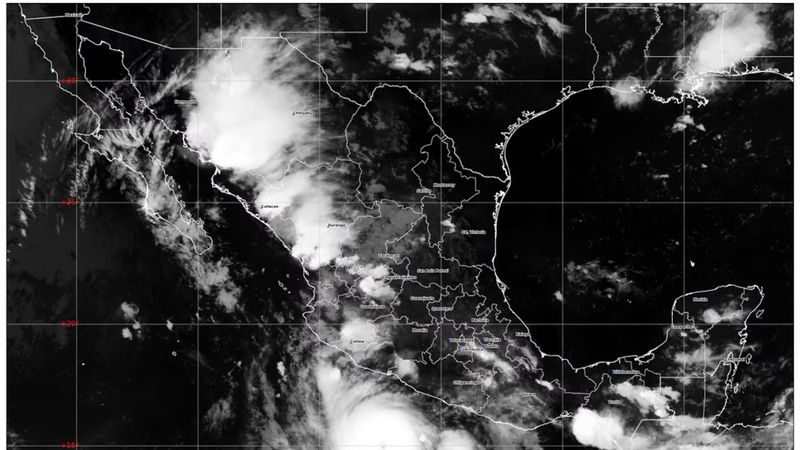
Hurricane Polo regained Category 5 strength on Friday as the powerful storm churned off Mexico’s southwestern coast, packing maximum sustained winds of 180 mph and prompting evacuations, school closures and emergency preparations across several coastal states.
Polo’s winds had fluctuated as the hurricane moved across the eastern Pacific, but its intensity remained well above the 157 mph threshold for Category 5 status, the highest level on the Saffir-Simpson Hurricane Wind Scale, as per US local media reports
The National Hurricane Centre said additional fluctuations in strength were possible, although the storm was expected to begin gradually weakening over the weekend.
As of Friday, Polo’s centre was about 320 miles southwest of Cabo Corrientes in Mexico’s Jalisco state. The hurricane was moving west at roughly 10 mph.
Forecast models indicated that Polo would turn toward Baja California Sur and approach the peninsula on Monday.
The US State Department, citing forecast guidance, said the storm was expected to weaken to Category 1 strength before making landfall in northern Baja California Sur, then continue northeast toward southern Sonora.The hurricane could bring 4 to 8 inches of rainfall, with isolated totals reaching 10 inches, across parts of Baja California Sur. The National Hurricane Center warned that the rainfall could trigger life-threatening flooding and mudslides, particularly in areas of steep terrain.
Polo-generated swells were also expected to spread along Mexico’s southwestern and west-central coasts and toward the Baja California Peninsula. Forecasters warned of dangerous surf, rip currents and coastal flooding.
Mexican authorities ordered evacuations, opened emergency shelters and deployed military personnel to areas considered vulnerable to the storm, as per US media.
In Acapulco, authorities suspended classes as officials prepared for potential impacts from the hurricane. Shelters remained open across Guerrero, while municipal and state officials coordinated with national authorities on emergency preparations.
Authorities in Michoac n also suspended classes through Friday in coastal municipalities and urged residents to avoid unnecessary travel.
Polo underwent an extraordinary period of rapid intensification earlier in the week.
The storm’s maximum sustained winds increased from about 45 mph early Monday to 150 mph by Tuesday morning.
That dramatic strengthening met the criteria for extreme rapid intensification, a term used when a tropical cyclone’s winds increase by at least 58 mph within 24 hours.
Polo eventually reached maximum sustained winds of 180 mph, placing it firmly within Category 5 territory, according to NASA Science.
The hurricane’s central pressure also made it the second-strongest hurricane on record in the Eastern Pacific by that measure, behind Hurricane Patricia in 2015. Its peak wind speed tied Hurricane Rick from 2009 for the region’s third-highest recorded maximum.
NASA atmospheric scientist Gary Partyka described the storm’s strengthening as an unusually rapid transformation, saying Polo developed in an environment characterised by weak wind shear, abundant moisture, warm ocean temperatures and atmospheric instability.
The National Hurricane Center similarly described the storm’s intensification as “truly remarkable.”
Meanwhile, another system in the Pacific strengthened into Hurricane Nolo as it moved toward Hawaii’s Big Island.
Forecasters were monitoring Nolo separately from Polo as it approached the Hawaiian Islands, adding to an unusually active period of tropical weather across the Pacific.
Thousands of miles away in New York, severe weather preparations were also affecting the United Nations General Assembly’s high-level week.
UN officials ordered outdoor broadcasters at UN Headquarters to dismantle tents and canopies Friday as a Nor’easter approached the New York area.
The UN Media Accreditation and Liaison Unit said the outdoor Media Centre and the 47th Street entrance would close because of a wind advisory issued by the National Weather Service.
The weather service warned of heavy rain and wind gusts exceeding 80 kph in the New York area through the weekend.
The United Nations traditionally installs two large tents on the North Lawn near the 47th Street entrance during the annual General Assembly high-level week to accommodate visiting radio and television journalists and crews.
While Polo continues to weaken and move toward the Baja California Peninsula, authorities along Mexico’s Pacific coast remain on alert for flooding, mudslides, dangerous surf and other storm-related hazards