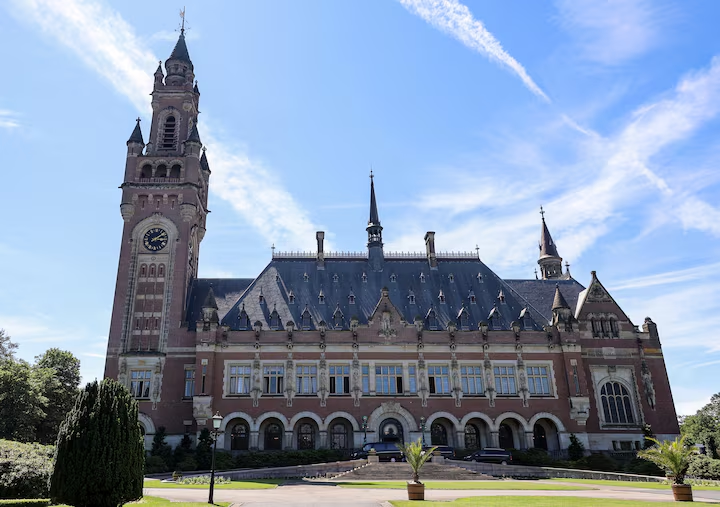
India rejects Indus Waters arbitration award, says tribunal has no jurisdiction
The Hague-based panel said the treaty remains in force and sought temporary limits on parts of the Ratle hydropower project; New Delhi rejected both its authority and findings.
NEW DELHI/THE HAGUE:
India on Monday categorically rejected an award issued by what the Ministry of External Affairs described as an “illegally constituted” Court of Arbitration concerning the Indus Waters Treaty and the Ratle Hydroelectric Project in Jammu and Kashmir.
The Permanent Court of Arbitration said the 1960 treaty remained in force and that India must continue observing its provisions governing the design and operation of hydroelectric projects on the western rivers.
It also said India should not raise the Ratle project’s dam wall and power-intake structure above specified levels until 90 days after a World Bank-appointed neutral expert delivers a separate determination. That decision is expected by July 2027.
India rejected the tribunal’s jurisdiction, saying its pronouncements would have no effect on India’s sovereign decisions or projects. New Delhi has consistently maintained that parallel proceedings through a neutral expert and an arbitration panel are legally untenable.
India placed the treaty in abeyance in April 2025 after the Pahalgam terrorist attack killed 26 people. New Delhi identified Pakistani nationals among the assailants and said continued observance of the agreement was conditional on Pakistan credibly ending support for cross-border terrorism. Islamabad denied involvement in the attack.
The court took a different view, holding that the treaty provides no unilateral mechanism for suspension or termination. That creates an unresolved dispute between the panel’s interpretation and India’s refusal to recognise the proceeding.
The award does not physically halt construction by itself. Its practical effect will depend on India’s actions, the neutral expert’s decision and any response from the World Bank, which facilitated the treaty but is not an enforcement authority over India.
The Ratle project is an 850-megawatt run-of-river development on the Chenab in Kishtwar district. India maintains that such projects are permitted under the treaty, subject to specified technical conditions.