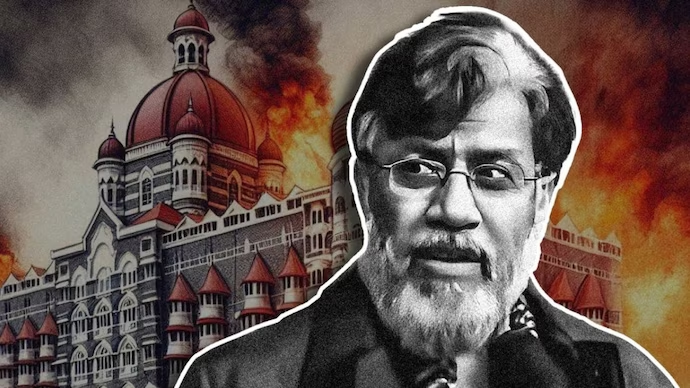
In a swift and somewhat desperate move, Pakistan’s Foreign Office has issued a statement distancing the country from Tahawwur Rana, a key figure involved in the 2008 Mumbai terror attacks. The statement comes after the extradition of Rana to India, where he faces charges related to his role in the devastating attacks that killed 166 people and left hundreds more wounded.
In a video statement, Pakistan’s Foreign Office emphasized that Tahawwur Rana had not renewed his Pakistani travel documents in over two decades, reiterating that his Canadian nationality was “very clear.” The statement seemed aimed at downplaying any association with Rana, despite growing evidence and speculation about his connections to Pakistan’s military and intelligence services, particularly the ISI (Inter-Services Intelligence).
The statement has raised eyebrows among critics and analysts, who suggest that Pakistan’s sudden disavowal of Rana is part of a larger strategy to distance itself from the fallout of his impending trial in India. Many believe that Rana’s testimony could expose crucial details about Pakistan’s direct involvement in the planning and execution of the Mumbai attacks, further implicating high-ranking officials in the country’s military and intelligence services.
Tahawwur Rana’s Connections to Pakistan’s Military and ISI
Tahawwur Rana, a Canadian national of Pakistani origin, has long been suspected of being an insider within Pakistan’s military and intelligence circles. He was accused of providing logistical support to the Mumbai attackers and facilitating their entry into India. However, sources with access to confidential intelligence reports suggest that Rana’s involvement may have been far deeper, possibly implicating Pakistani officials at the highest levels.
The Mumbai attacks, which were carried out by 10 Lashkar-e-Taiba militants, were widely believed to have been orchestrated with support from Pakistan-based militant groups. While Pakistan has repeatedly denied any official involvement, several investigations and testimonies have pointed to links between the attackers and elements within Pakistan’s military and intelligence community.
Rana’s extradition and the potential for his cooperation with Indian authorities are seen as a significant blow to Pakistan, as his testimony could reveal details of how the attacks were conceived and financed, and the role played by Pakistani intelligence in supporting the operation.
A Desperate Move by Pakistan?
The timing of Pakistan’s statement distancing itself from Rana appears calculated, as the country grapples with international pressure and scrutiny regarding its role in harboring terrorists and supporting militant groups. Pakistan has long faced accusations of providing safe haven to terrorists, especially those responsible for high-profile attacks like the Mumbai massacre.
Experts suggest that Pakistan’s Foreign Office is trying to deflect attention away from its complicity in the attacks, fearing that any revelations from Rana could further damage the country’s reputation on the global stage. Given the mounting evidence and the high-profile nature of the case, Pakistan may be seeking to avoid any direct connection to the alleged mastermind behind the attacks.
Impact of Rana’s Extradition on Pakistan-India Relations
Rana’s extradition is also expected to have significant repercussions on Pakistan-India relations, already fraught with tensions. India has long accused Pakistan of not doing enough to combat terrorism, especially with regards to groups like Lashkar-e-Taiba, which was behind the Mumbai attacks. With Rana’s extradition and potential cooperation with Indian authorities, India is likely to press for further action against Pakistan-based militants.
The extradition is also seen as a major victory for India’s counterterrorism efforts, as it brings a key figure involved in one of the most devastating attacks on Indian soil to face justice. However, the Indian government has also expressed concerns about the lack of cooperation from Pakistan in fully addressing the origins of the terror plot.
What Lies Ahead?
As the legal process unfolds, all eyes will be on Tahawwur Rana and his potential testimony. His extradition could unravel key details about the planning of the Mumbai attacks and shed light on Pakistan’s role in supporting militant groups that operate in the region. It remains to be seen whether Pakistan will continue to distance itself from Rana, or if new revelations will emerge, forcing the country to confront its own role in fostering extremism.
Pakistan’s denial of Rana’s association with its state apparatus may be a temporary tactic, but as the investigation progresses, the pressure for accountability will only grow. The international community will likely continue to scrutinize Pakistan’s actions, as it faces increased calls to fully cooperate in the investigation of the 26/11 attacks and dismantle the infrastructure that supports terrorism within its borders.
In the meantime, the extradition of Tahawwur Rana marks a significant moment in the long-running saga of the 2008 Mumbai attacks, and the ongoing battle for justice and transparency in one of the deadliest terror attacks in recent history.