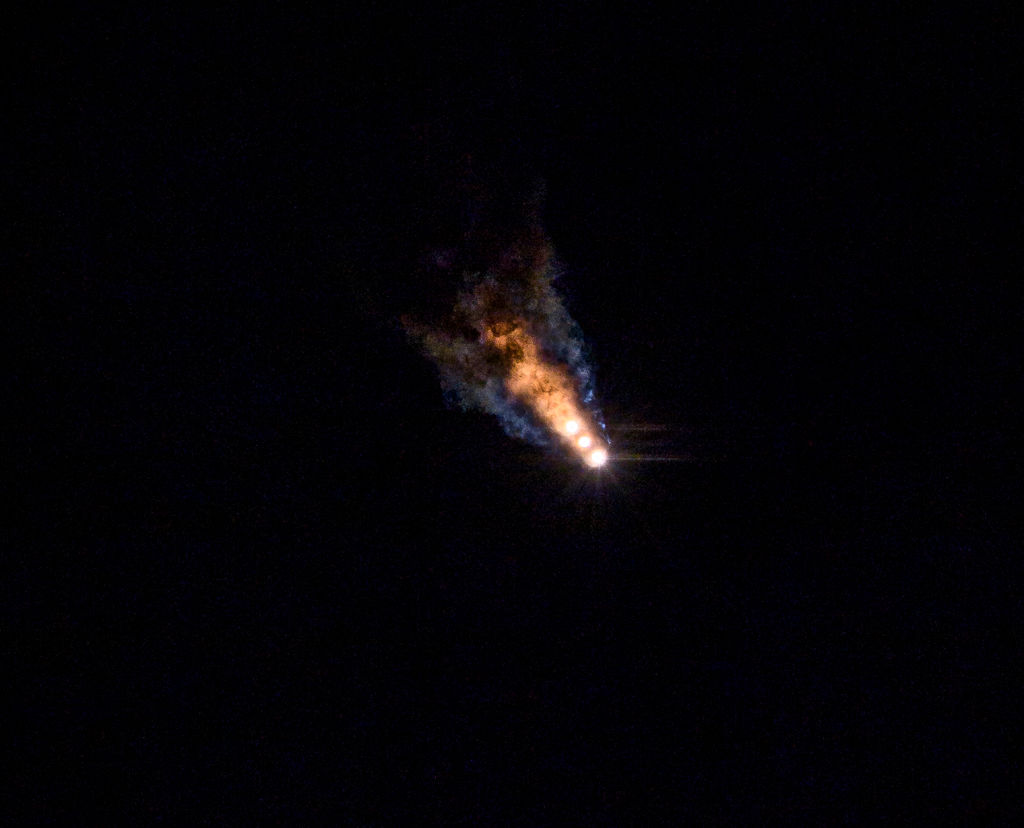
NASA has confirmed that its Parker Solar Probe is safe after becoming the first human-made object in history to fly dangerously close to the Sun. On December 24, the probe made a record-setting approach, coming within just 6.1 million kilometers (3.8 million miles) of the Sun’s surface.
Following this unprecedented flyby, NASA received a beacon signal from the probe on December 26, confirming its health after the closest approach, known as the perihelion. At this time, the Parker Solar Probe was traveling at a staggering speed of about 700,000 kilometers per hour (430,000 miles per hour), making it the fastest human-made object ever created. Due to its proximity to the Sun, the spacecraft was out of communication with Earth during the closest approach, but the beacon signal confirmed it had completed the maneuver successfully.
“This close approach marks a significant milestone in our efforts to unlock the mysteries of the Sun,” said Michael Buckley, a member of the mission operations team at Johns Hopkins Applied Physics Laboratory. “The detailed telemetry data, expected to arrive by January 1, will provide invaluable insights into the Sun’s outer atmosphere and its dynamic behavior.”
Launched in 2018, the Parker Solar Probe’s mission is to explore the Sun’s outer atmosphere and understand phenomena like the solar wind, the continuous flow of charged particles emitted by the Sun. This flyby is the first of the probe’s three final and closest approaches to the Sun’s surface.
These close approaches have already helped scientists gain critical insights into the origins of the solar wind and map the outer boundary of the Sun’s atmosphere. Parker has completed 21 close approaches to the Sun to date, with the most recent perihelion occurring on September 30. In addition, the spacecraft used Venus’ gravity to refine its trajectory, including a gravity-assist maneuver in November, which passed just 387 kilometers above Venus’ surface, setting up this record-breaking approach.
With each successive flyby, the Parker Solar Probe is providing scientists with the tools needed to answer fundamental questions about the Sun. These unprecedented observations will allow researchers to study how material in the Sun’s outer atmosphere heats to millions of degrees, trace the origins of the solar wind, and explore how energetic particles accelerate to nearly the speed of light.
The data gathered from these flybys will help advance our understanding of the Sun’s influence on space weather, which in turn has the potential to improve our knowledge of how solar activity impacts Earth’s technological systems and communications infrastructure.
ParkerSolarProbe #NASA #SpaceExploration #Astronomy #SunScience #Perihelion #SolarWind #SpaceInnovation #SpaceWeather #SolarPhysics