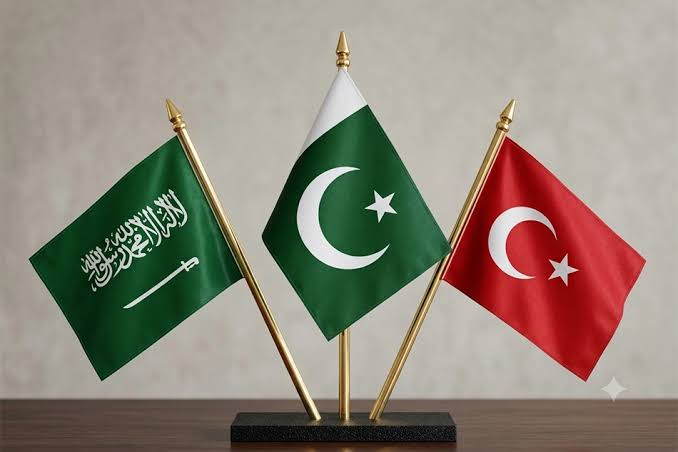
A defence pact is easiest to celebrate on the day it is signed. The harder question is what its promises mean when a member comes under pressure.
The Makkah Joint Defence Agreement, signed by Saudi Arabia, Türkiye and Pakistan, has reached that harder question sooner than its architects may have expected. As Houthi attacks on Saudi Arabia intensify, Islamabad has affirmed its commitment to the pact but says no military response is currently under discussion. Pakistan’s position is understandable: it wants to reassure Riyadh without being pulled into a wider conflict involving Yemen and Iran. But the more carefully Islamabad hedges, the more clearly the agreement’s central test comes into view: what, in practice, does “an attack on one is an attack on all” require?
There is no dishonour in choosing diplomacy over war. In a region already aflame, restraint can be a mark of judgment. Pakistan shares a sensitive frontier with Iran, has its own serious security pressures and must consider the consequences of entering another country’s conflict. A military deployment could inflame tensions across the region and carry costs Pakistan may not be able to manage. These are substantial reasons to think carefully before acting.
But a government cannot market a security guarantee as a symbol of collective resolve and then leave its meaning undefined when events test it. If the pact does not automatically require military intervention, its members need to explain what it does require: intelligence sharing, air defence, logistical support, joint planning, diplomatic action or some combination of them. Without clarity, the agreement risks becoming a phrase with different meanings in Riyadh, Ankara and Islamabad.
Pakistan is trying to hold two positions at once. It wants the security and economic benefits of a close partnership with Saudi Arabia; it also wants to avoid a direct confrontation with Iran or Iran-aligned forces. That balance may be prudent, but it cannot be sustained through grand language alone. The more Islamabad invokes the pact to warn adversaries, the more its partners will expect to know what it is prepared to do if those warnings fail.
The same problem faces Riyadh. A mutual-defence agreement can deter only if potential adversaries believe its members have agreed on what counts as an attack and how they will respond. The pact’s public language may suggest unity, but operational credibility depends on details: shared assessments, decision-making procedures, military coordination and political consent. Until those arrangements are clear, comparisons with established collective-defence alliances are premature.
Pakistan’s financial dependence on Saudi support adds another layer. Close economic ties do not invalidate a defence partnership; states routinely combine economic and security interests. Yet when the relationship is presented as strategic solidarity, while Pakistan faces acute economic pressures, observers will ask whether the partnership rests on durable shared interests or immediate need. Islamabad can answer that question only through consistent conduct and a clear account of what the agreement actually entails.
This is not a demand that Pakistan send troops to Yemen. Such a move could widen the conflict, sharpen sectarian tensions and expose Pakistan to consequences far beyond the battlefield. Nor does diplomatic engagement with Iran amount to betrayal of Saudi Arabia. A state can support a partner’s security while working to prevent escalation. The real measure is whether Pakistan can explain how those commitments fit together—and whether its actions match the limits it has set.
The Makkah pact still has room to become a useful framework for cooperation. But its value will not be measured by the ceremony, the language of solidarity or the warnings issued in its name. It will be measured by whether its members can turn the promise of collective security into a defined, coordinated response—and whether they can do so without turning a regional crisis into a larger war.
For Pakistan, the choice is not simply between intervention and inaction. It is between giving the pact a credible, carefully bounded meaning and allowing ambiguity to do the work of policy. A defence agreement can promise restraint as well as resolve. But its partners and its adversaries must be able to tell which one it promises in the moment that matters.