



The United Kingdom ordered the expulsion of Myanmar's defence attaché, summoned its charge d'affaires and called for an urgent session of the UN Security Council after the International Court of Justice found on Thursday that Myanmar committed genocide against the Rohingya. UK Foreign Secretary Ed Miliband said further measures will follow in the coming days. The court ruled by nine votes to six, and Myanmar must pay reparations and comply, with terms to be set later.
Governments and the UN
Myanmar's shadow National Unity Government said it respects the court's authority and will consider its findings and orders. Bangladesh, which hosts about 1.2 million Rohingya, welcomed the ruling, urged Myanmar to implement it without delay and said repatriation remains the only viable solution. The Gambia, which brought the case in 2019, welcomed it with profound satisfaction, and the Organisation of Islamic Cooperation said it offers redress to victims and upholds the principle of no impunity. An unnamed United States official said Washington is studying the ruling and stressed preventing politicisation of the court. UN Secretary-General Antonio Guterres called it a demonstration of international justice and urged Myanmar to comply, and UN human rights chief Volker Turk said it clearly concludes that Myanmar is responsible for one of the most egregious crimes known to humankind. The UN refugee agency said more than 1.3 million Rohingya remain displaced, mostly in Bangladesh.
Rohingya and rights groups
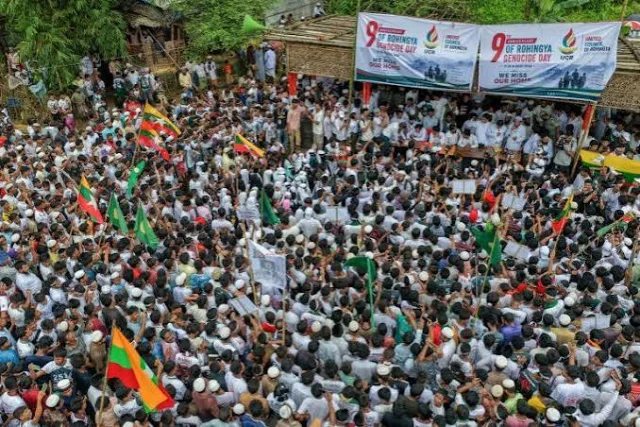
A coalition of 219 Rohingya and Myanmar civil society groups demanded reparations, restored citizenship, safe return of refugees and criminal accountability for military leaders, including Min Aung Hlaing. Nay San Lwin of the Arakan Rohingya National Council said justice means restored citizenship, a recognised identity and a safe and dignified return home, and Wai Wai Nu of the Women's Peace Network said the ruling permanently shattered a state-sponsored lie about Rohingya identity. UN special rapporteur Yanghee Lee said justice has been decided but not yet delivered. Amnesty International called the ruling a historic recognition of the atrocities, and Human Rights Watch called it a long-awaited recognition of the Rohingya's suffering.