


ASEAN and China did not finish the South China Sea Code of Conduct at the 49th ASEAN Summit in Manila on Sunday 15 November. The two sides reached provisional agreement on about 80 per cent of the draft, but Philippine Foreign Minister Theresa Lazaro told a press conference that there is no conclusion yet.
Why there is no code
Several key issues are unresolved, among them whether the code will be legally binding. ASEAN members and China differ on how it should work, and Southeast Asian states want it grounded in international law and have accused Beijing of disregarding it while asserting sovereignty over nearly all of the sea. The Philippines, as chair, committed to speeding up the talks and concluding the code in 2026, after negotiations that have already run for more than two decades. Beijing maintains that its actions in the sea have been lawful and professional. China's claims overlap the exclusive economic zones of Brunei, Indonesia, Malaysia, the Philippines and Vietnam, and the report says a working code is essential to prevent escalation and manage incidents at sea.
Haze apology
On Sunday Indonesian President Prabowo Subianto apologised to Singapore and Malaysia, on behalf of his government, for any effects of Indonesian forest fires on their people, during an ASEAN session, according to the presidential palace. Authorities will keep acting against companies linked to the fires, and a new body is being prepared to strengthen fire prevention. Lazaro said Indonesia was very candid about its efforts. Leaders urged members to ratify the ASEAN Coordinating Centre on Transboundary Haze Pollution Control.
Indonesia is facing its most intense wildfires in 11 years, mainly on Sumatra, Kalimantan and Papua, driven partly by a strong El Nino. A satellite monitor estimates that 2.88 million hectares have burned so far in 2026, roughly 18 times the size of London and nearly a million hectares more than its September update, which already exceeds 2019, the worst year in its records. The government has not published official burned-area figures since it reported 202,000 hectares razed by the end of July, and the monitor's founder says his estimate is conservative because smoke has obscured the imagery.
Philippines and Australia
On the same day the Philippines and Australia signed a defence cooperation arrangement in Manila, ahead of the summit, with Australian Prime Minister Anthony Albanese witnessing it. Philippine Defence Secretary Gilberto Teodoro called it an anti-red-tape measure that turns a task of 100 steps into 10, by streamlining the bilateral visiting forces agreement. It covers closer maritime, air and land cooperation, disaster response and the Philippines' deterrence posture, and Albanese said Australia will invest more in maritime awareness, including drones, equipment and training. China had not responded to requests for comment.
Indonesia's vacant vice presidency
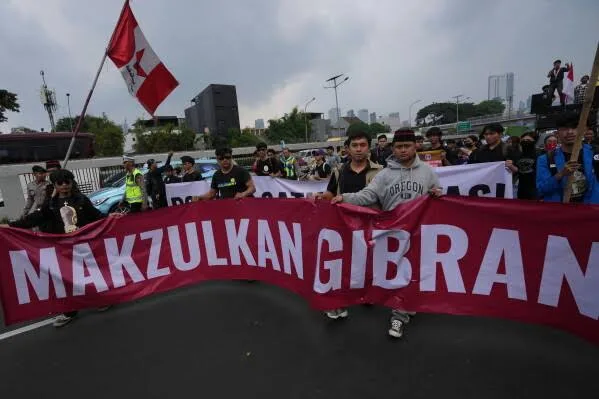
Most coalition parties, including the National Mandate Party, the Democratic Party and Golkar, have declined to put forward vice presidential candidates after Gibran Rakabuming Raka resigned on 12 November, leaving the choice to Prabowo, who will pick two names for the Assembly session on 2 December. Prabowo said he would find a replacement after his trips to the summit and to the APEC meetings in Shenzhen.